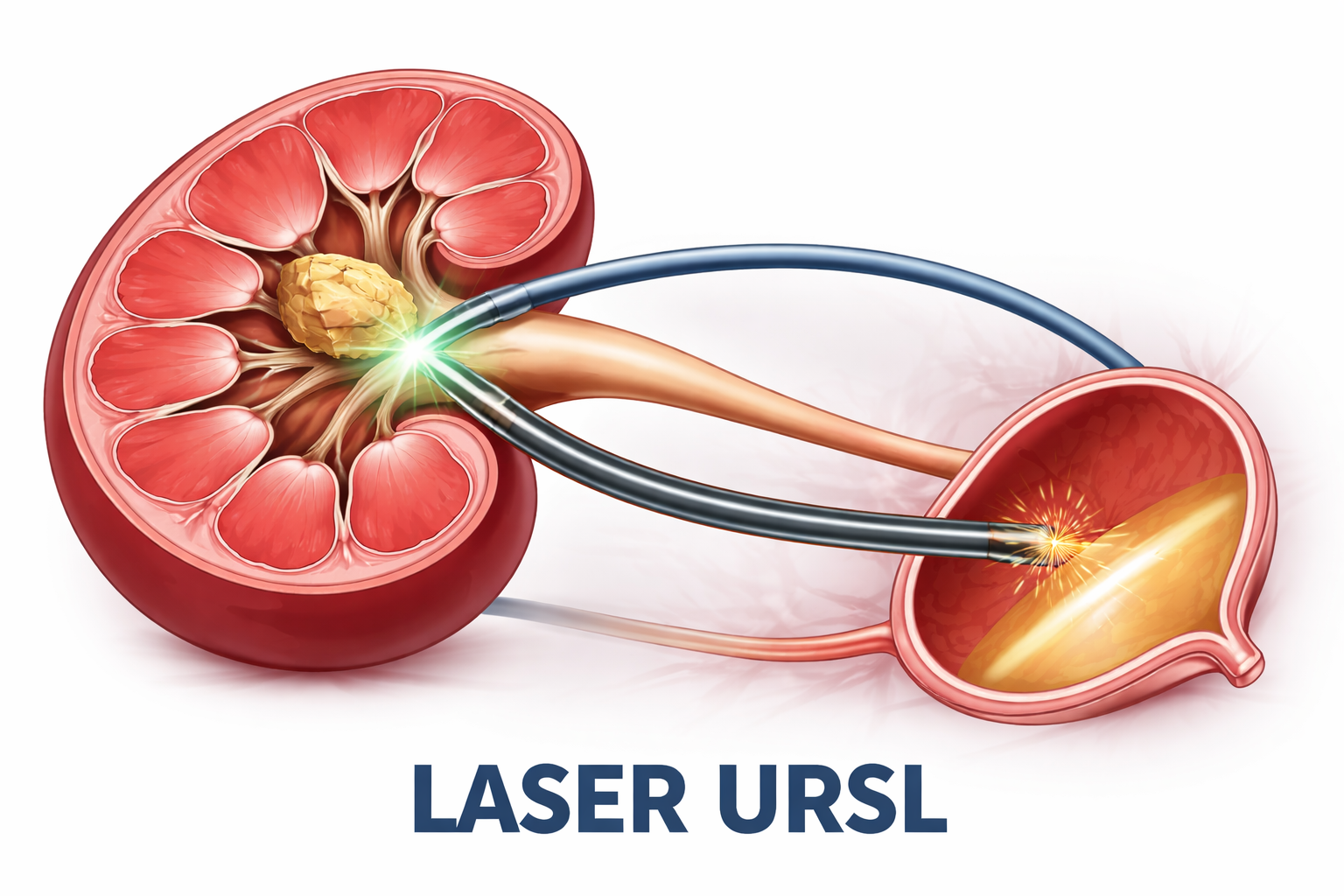
Ureteroscopy with Laser Lithotripsy (URSL) is a modern, minimally invasive procedure used to treat stones located in the ureter and kidney. In this technique, a thin, flexible instrument called a ureteroscope is passed through the natural urinary passage to directly visualize the stone. Using advanced laser technology, the stone is carefully broken into smaller fragments that can either be removed or allowed to pass naturally through urine. URSL and Laser URSL have become highly effective treatments for urinary stones because they do not require any surgical incision and usually allow faster recovery compared to traditional surgery. With advances in endoscopic technology, the procedure offers high precision, minimal discomfort, and excellent success rates for patients suffering from ureteric stones.
Ureteric stones generally develop when minerals and salts present in urine crystallize and form solid deposits in the kidneys. These stones may later travel down into the ureter, causing obstruction and pain. Several factors contribute to stone formation, including dehydration, diets high in salt or protein, excessive intake of oxalate-rich foods, and metabolic disorders that affect calcium or uric acid levels. Genetic predisposition can also play a role, as some individuals are naturally more prone to developing kidney stones. Other contributing factors include recurrent urinary tract infections, obesity, and certain medical conditions that alter the chemical balance of urine.
Patients with ureteric stones often experience sudden and severe pain, usually felt in the lower back or side of the abdomen and sometimes radiating towards the groin. The pain may come in waves and can be intense enough to interfere with daily activities. Other common symptoms include burning sensation during urination, blood in the urine, frequent urge to urinate, and nausea or vomiting due to severe discomfort. In some cases, patients may also develop fever or chills if an infection is present. The severity of symptoms often depends on the size and location of the stone and the degree of blockage in the urinary tract.
Accurate diagnosis is essential to determine the size, location, and number of stones before planning treatment. Doctors typically begin with a detailed medical history and physical examination, followed by imaging studies such as ultrasound or CT scans, which provide clear visualization of urinary stones. Urine tests may be performed to detect infection, blood, or crystals, while blood tests help evaluate kidney function and identify metabolic abnormalities that may contribute to stone formation. These diagnostic tests allow the urologist to choose the most appropriate treatment approach for each patient.
Treatment for ureteric stones depends on their size, location, and the symptoms they cause. Smaller stones may pass naturally with increased fluid intake and medications that help relax the ureter. However, when stones are larger or cause significant pain or obstruction, procedures like URSL become necessary. During URSL, the ureteroscope is carefully inserted through the urinary tract to reach the stone. A high-energy laser is then used to break the stone into fine fragments in a process known as Laser URSL. These fragments are either removed using specialized instruments or allowed to pass naturally through urine. In many cases, a temporary stent may be placed inside the ureter to ensure smooth urine flow and facilitate healing after the procedure.
Recovery after URSL and Laser URSL is usually quick, and most patients can resume normal activities within a few days. Patients are generally advised to drink plenty of water to help flush out any remaining stone fragments. Mild discomfort, burning during urination, or slight blood in the urine may occur temporarily but usually resolves within a short period. Doctors may prescribe medications to relieve discomfort, prevent infection, and assist in passing residual fragments. Follow-up visits and imaging tests are often recommended to ensure that the urinary tract is clear of stones and functioning normally.
URSL is considered a safe and highly effective procedure, but like any medical treatment, it may carry some potential risks. Minor complications can include temporary bleeding, urinary tract infection, or irritation from a ureteric stent. In rare cases, there may be injury to the ureter or incomplete removal of stone fragments requiring additional treatment. However, with experienced specialists and advanced equipment, the risk of serious complications remains very low. Careful post-procedure monitoring helps ensure a smooth and safe recovery.
Medical attention should be sought if a patient experiences persistent flank pain, blood in the urine, difficulty passing urine, or recurrent urinary tract infections. Severe pain accompanied by nausea, vomiting, fever, or chills may indicate a blocked ureter or infection and requires immediate evaluation. Early consultation with a qualified urologist allows timely diagnosis and treatment, preventing complications and protecting long-term kidney health. Regular follow-up and preventive guidance can also help reduce the risk of future stone formation.

Chat With Me