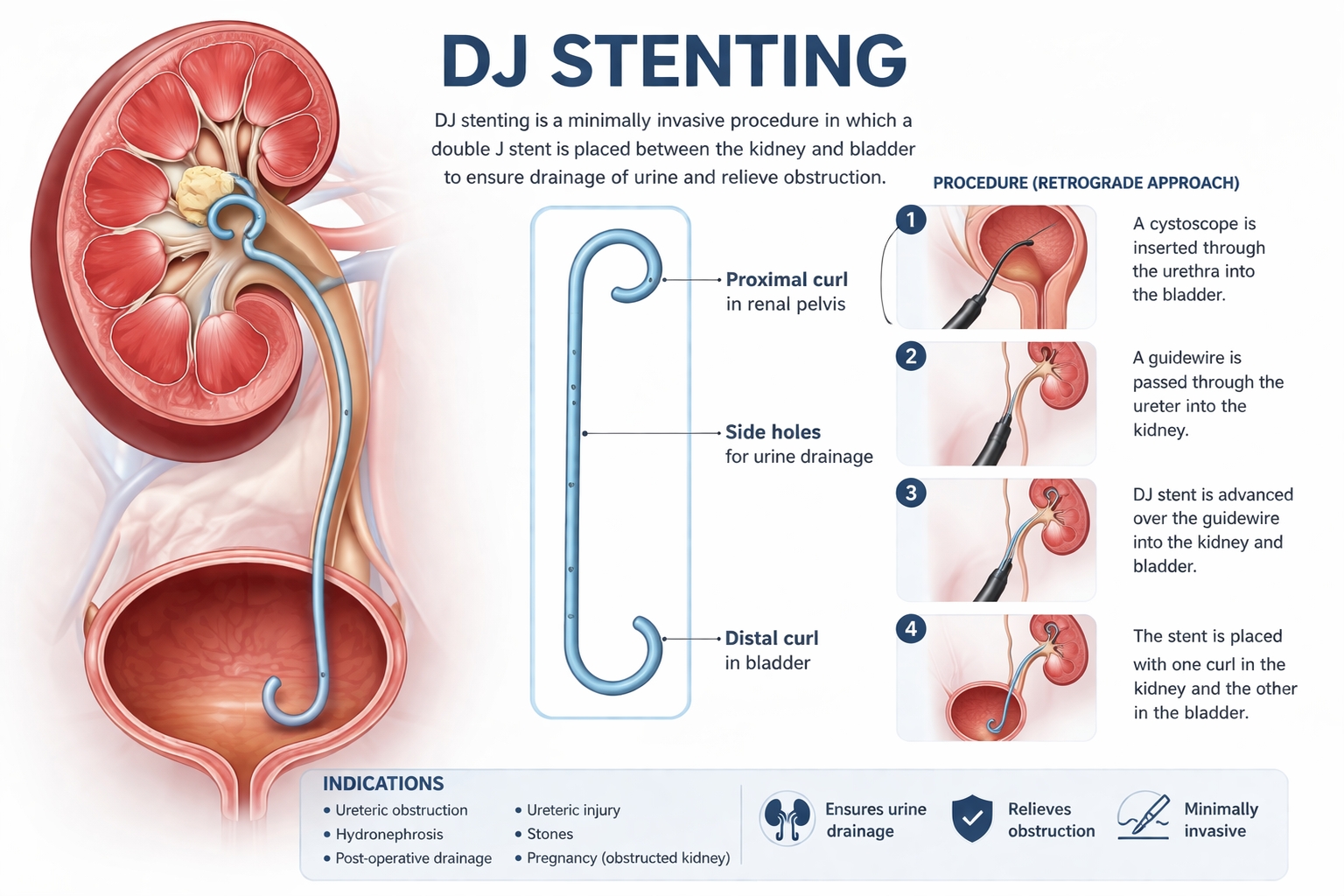
DJ stenting, also known as Double J stenting, is a commonly performed urological procedure used to ensure the proper drainage of urine from the kidney to the bladder. A thin, flexible tube called a Double J stent is placed inside the ureter—the tube that carries urine from the kidney to the bladder—to keep it open and allow urine to flow freely. The stent is called “Double J” because both ends of the tube are curved like the letter J, which helps keep it securely positioned in the kidney and bladder. DJ stenting is often used temporarily in patients who have ureteral blockage due to kidney stones, swelling, infection, or after certain urological procedures. The procedure is minimally invasive and usually performed using endoscopic techniques, allowing patients to recover quickly with minimal discomfort.
DJ stenting is typically recommended when there is an obstruction or narrowing in the ureter that prevents normal urine flow. One of the most common causes is kidney stones that block the ureter and cause severe pain or kidney swelling. Inflammation, infection, or scar tissue in the urinary tract can also lead to narrowing of the ureter and impaired urine drainage. In some cases, tumors within or around the urinary tract may compress the ureter and obstruct urine flow. DJ stents are also frequently placed after procedures such as ureteroscopy, kidney stone removal, or reconstructive urological surgeries to prevent temporary blockage caused by swelling and to promote proper healing.
Patients who require DJ stenting often experience symptoms related to urinary obstruction. These may include severe flank pain or lower abdominal pain, difficulty passing urine, burning during urination, or frequent urination. Some individuals may develop nausea, vomiting, or fever if the obstruction leads to infection. In certain cases, patients may notice blood in the urine or experience recurrent urinary tract infections. When the ureter becomes blocked, urine may accumulate in the kidney, causing a condition known as hydronephrosis, which can lead to persistent discomfort and kidney damage if left untreated.
Diagnosis typically involves a detailed medical history, physical examination, and imaging studies to identify the underlying cause of ureteral obstruction. Ultrasound is often used as an initial investigation to detect kidney swelling or urinary blockage. Advanced imaging techniques such as CT scan or X-ray may be recommended to precisely locate kidney stones or other obstructions in the urinary tract. Urine tests and blood tests may also be performed to check for infection, kidney function, and other abnormalities. Based on these findings, a urologist determines whether DJ stenting is required to relieve the obstruction and protect kidney function.
DJ stenting is usually performed as a minimally invasive procedure using a cystoscope, a thin instrument inserted through the urethra into the bladder. Through this approach, the urologist carefully places the stent into the ureter so that one end rests in the kidney and the other end remains in the bladder. This ensures continuous urine drainage and relieves pressure on the kidney. The procedure is typically done under local, spinal, or general anesthesia depending on the patient’s condition. In many cases, DJ stents are used temporarily until the underlying cause, such as a kidney stone or narrowing, is treated. The stent may remain in place for a few days to several weeks, after which it is removed during a simple endoscopic procedure.
After DJ stent placement, patients are usually able to return home the same day or shortly after the procedure. Mild discomfort, urinary frequency, or a sensation of urgency may occur temporarily as the body adjusts to the stent. Drinking plenty of water helps maintain urine flow and reduces irritation. Doctors may prescribe medications to control pain, prevent infection, or reduce bladder spasms. Patients are generally advised to avoid strenuous activities for a short period and follow scheduled follow-up visits to monitor recovery. The stent must be removed or replaced within the recommended timeframe to avoid complications.
DJ stenting is considered a safe procedure, but like any medical intervention, it may carry certain risks. Some patients may experience mild side effects such as urinary discomfort, blood in the urine, or frequent urination. Occasionally, the stent may cause bladder irritation or flank discomfort during urination. In rare cases, complications such as stent migration, infection, or encrustation (mineral buildup on the stent) can occur if the stent remains in place for too long. Proper follow-up and timely removal significantly reduce the likelihood of these complications.
Patients should seek medical attention if they experience severe pain, persistent fever, heavy bleeding in the urine, or difficulty urinating after DJ stent placement. These symptoms may indicate infection or other complications that require prompt evaluation. Regular follow-up with a urologist is essential to ensure the stent is functioning properly and to determine the appropriate time for removal. Early consultation helps prevent kidney damage and ensures effective management of the underlying condition affecting the urinary tract.

Chat With Me