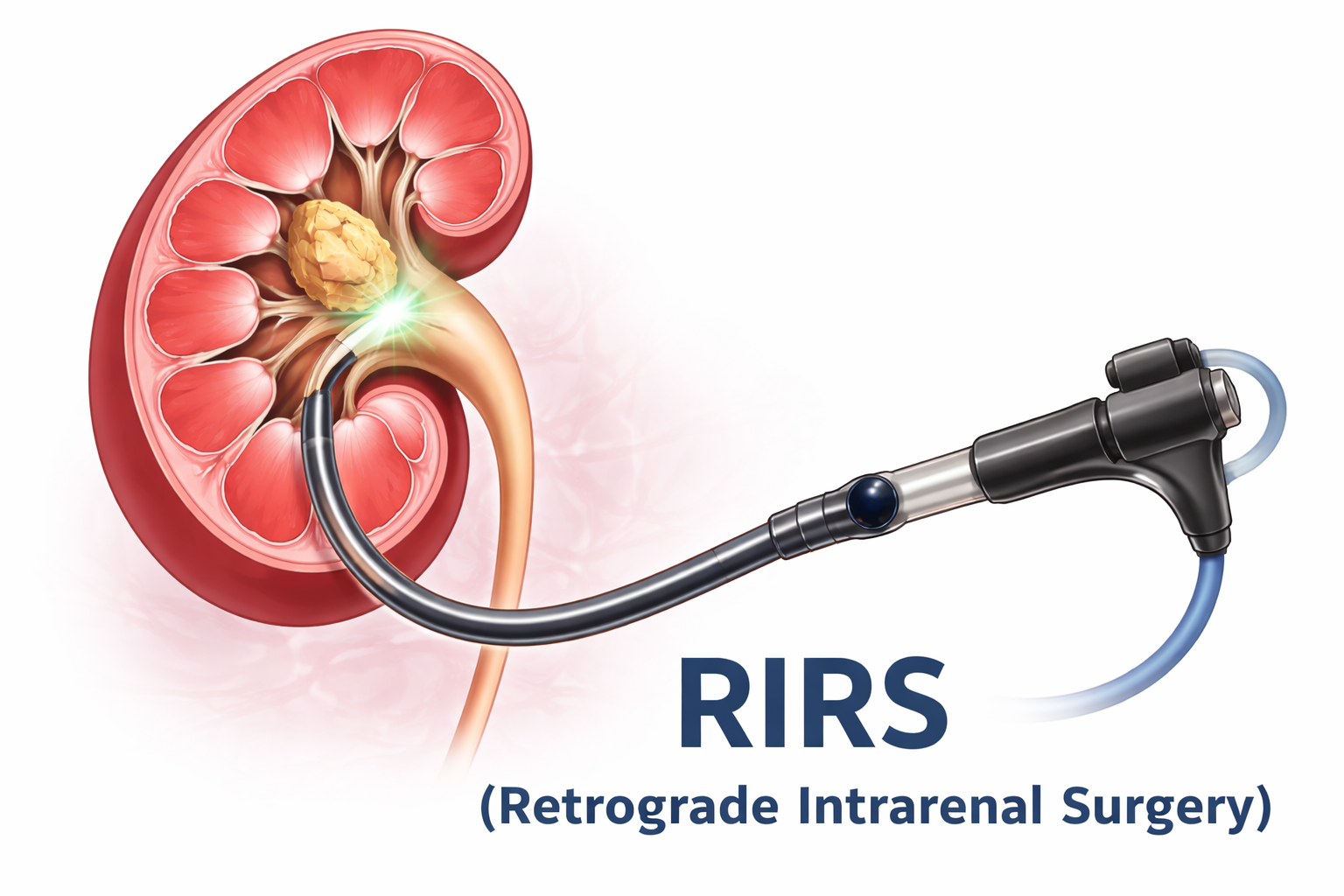
Retrograde Intrarenal Surgery (RIRS) is a modern, minimally invasive endourological procedure used to treat kidney stones located inside the kidney. It is performed using a flexible ureteroscope, a thin instrument that is passed through the natural urinary pathway—through the urethra, bladder, and ureter—into the kidney without making any external incision. Once the stone is reached, it is usually fragmented using a laser and the small pieces are either removed or allowed to pass naturally through urine. RIRS has become an advanced and highly effective treatment for kidney stones, especially those that are difficult to access with traditional methods. Under the expertise of experienced urologists such as Dr. Neil N. Trivedi, RIRS offers patients a safe procedure with minimal pain, faster recovery, and excellent outcomes.
Kidney stones treated with RIRS generally develop due to an imbalance of minerals and salts in the urine. Several factors contribute to the formation of these stones, including inadequate water intake, dietary habits high in salt or oxalate-rich foods, recurrent urinary infections, and certain metabolic conditions. Genetic predisposition can also increase the likelihood of developing kidney stones. Individuals with obesity, diabetes, or chronic dehydration may have a higher risk of stone formation. In some cases, kidney stones form due to abnormalities in the urinary tract that affect normal urine flow, allowing minerals to crystallize and accumulate over time.
Many patients with kidney stones experience significant discomfort or pain, although small stones may sometimes remain silent. Common symptoms include severe pain in the back or side (often radiating toward the lower abdomen or groin), burning sensation during urination, frequent urge to urinate, and blood in the urine. Some individuals may also experience nausea, vomiting, or fever if infection is present. The severity of symptoms often depends on the size and location of the stone. When stones become large or obstruct the flow of urine, prompt medical evaluation becomes necessary.
Accurate diagnosis is essential for determining the most appropriate treatment approach. Urologists typically begin with a detailed medical history and physical examination, followed by imaging studies to locate and assess the size of the kidney stones. Common diagnostic tools include ultrasound scans, CT scans, and X-rays of the urinary tract. Urine tests may be performed to check for infection, blood, or abnormal mineral levels, while blood tests help evaluate kidney function and identify metabolic factors contributing to stone formation. These evaluations allow the specialist to decide whether RIRS is the most suitable treatment option for the patient.
Retrograde Intrarenal Surgery is recommended for patients with kidney stones that are difficult to pass naturally or are not suitable for other treatments such as shock wave lithotripsy. During the procedure, a flexible ureteroscope is carefully guided into the kidney, allowing the surgeon to directly visualize the stone. A laser fiber is then used to break the stone into fine fragments, which are either extracted using small instruments or allowed to pass through urine. In some cases, a temporary ureteral stent may be placed to facilitate urine flow and aid healing. RIRS is particularly beneficial for stones located deep within the kidney, stones less than 2 cm in size, and for patients who require a minimally invasive solution with reduced recovery time.
Recovery after RIRS is usually quick, and most patients can resume normal activities within a few days. Doctors typically advise patients to drink plenty of fluids to help flush out any remaining stone fragments. Mild discomfort or slight blood in the urine may occur temporarily after the procedure but generally resolves within a short time. Patients may be prescribed medications to manage pain, prevent infection, or help with the passage of small fragments. Follow-up appointments and imaging tests are important to ensure that the kidney is completely free of stones and functioning normally.
Although RIRS is considered a safe and advanced procedure, like any medical intervention it may carry certain risks. Possible complications include urinary tract infection, bleeding, temporary discomfort during urination, or mild kidney irritation. In rare cases, there may be injury to the ureter or the need for additional procedures if fragments remain. The placement of a ureteral stent may cause temporary urinary symptoms such as urgency or mild pain, which usually resolves once the stent is removed. With skilled surgical expertise and proper post-operative care, the risk of complications remains low.
Medical attention should be sought if symptoms such as severe flank pain, persistent blood in the urine, difficulty urinating, fever, or repeated urinary infections occur. These signs may indicate kidney stones or complications that require timely evaluation. Early consultation with a qualified urologist helps prevent worsening symptoms and ensures appropriate treatment. If kidney stones are suspected or recurrent episodes occur, seeking specialized care from an experienced endourologist like Dr. Neil N. Trivedi can help patients receive accurate diagnosis, advanced treatment options such as RIRS, and long-term guidance for preventing future stone formation.

Chat With Me