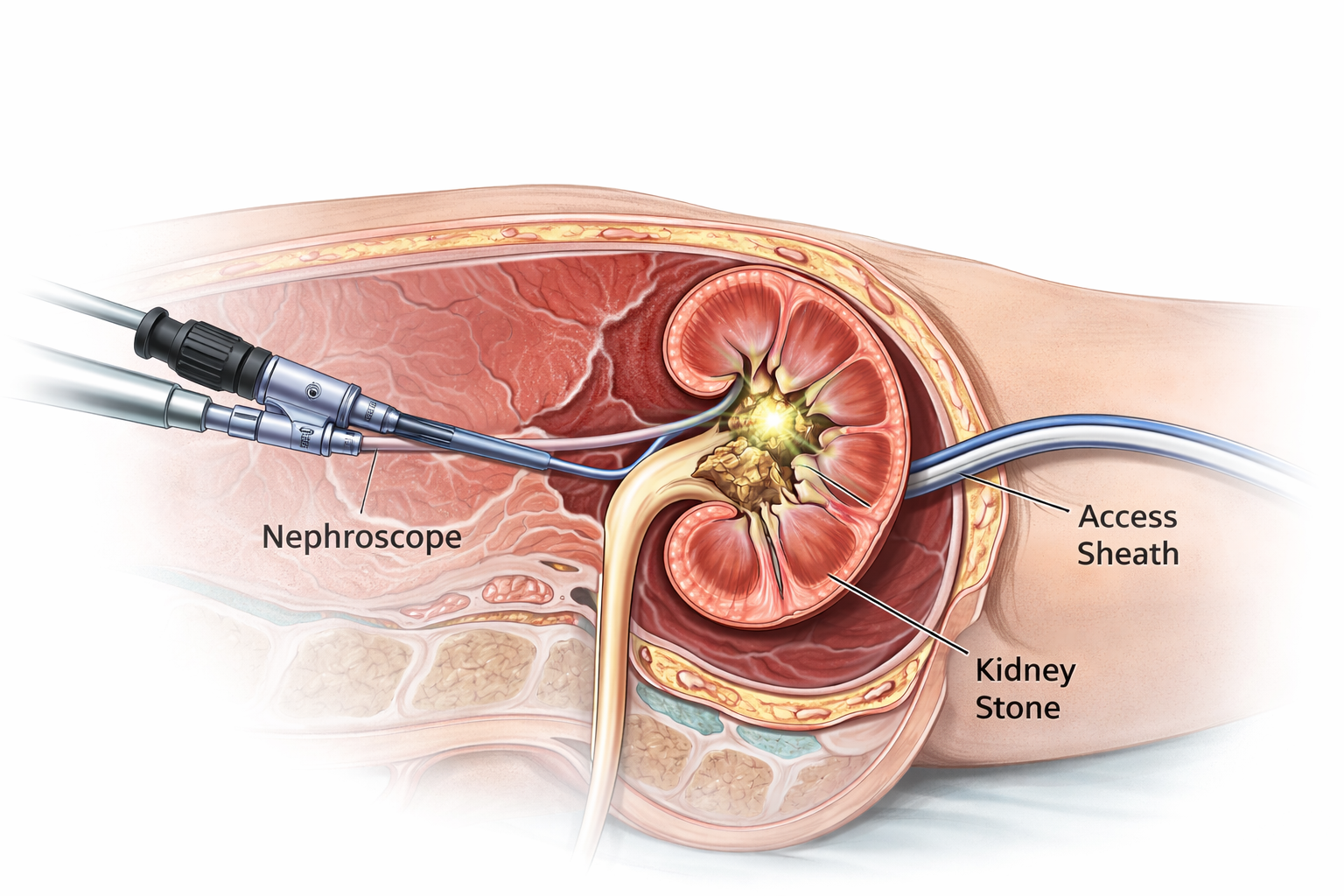
Percutaneous Nephrolithotomy (PCNL) is a minimally invasive surgical procedure used to remove large or complex kidney stones that cannot be effectively treated with medications or other non-invasive methods. The procedure involves creating a small passage through the skin into the kidney, allowing specialized instruments to access and remove the stone directly. PCNL is commonly recommended for kidney stones larger than 2 centimeters, stones that are very hard, or stones that cause persistent pain, infection, or blockage of urine flow.
Dr. Neil N. Trivedi, an experienced urologist and endourologist, performs PCNL using advanced endoscopic techniques to ensure precise stone removal while minimizing discomfort and recovery time. Compared with traditional open surgery, PCNL offers smaller incisions, reduced hospital stay, and faster recovery, making it one of the most effective treatments for large kidney stones.
Kidney stones develop when minerals and salts in the urine crystallize and form hard deposits inside the kidneys. Several factors can contribute to the formation of these stones, including dehydration, high levels of calcium or uric acid in the urine, and certain metabolic conditions. Dietary habits such as excessive salt intake, high consumption of animal protein, or inadequate fluid intake can also increase the risk of stone formation.
Some individuals may develop kidney stones due to genetic predisposition, recurrent urinary tract infections, or underlying medical conditions affecting kidney function. When these stones grow large or become lodged within the kidney, procedures like PCNL may be required to safely remove them.
Kidney stones that require PCNL often cause significant discomfort and noticeable symptoms. Patients may experience severe pain in the lower back or side, which can radiate toward the abdomen or groin. The pain may occur suddenly and fluctuate in intensity as the stone moves within the urinary tract.
Other common symptoms include blood in the urine, frequent or painful urination, nausea, vomiting, and a persistent urge to urinate. In some cases, kidney stones may lead to fever and chills if an infection develops. Large stones can also block the flow of urine, leading to swelling of the kidney and increased risk of complications.
Accurate diagnosis is essential to determine the size, location, and composition of kidney stones. A urologist typically begins with a detailed medical history and physical examination, followed by imaging tests to confirm the diagnosis. Ultrasound scans, X-rays, and CT scans are commonly used to identify the stone and assess its impact on the urinary system.
Urine and blood tests may also be performed to detect infection, evaluate kidney function, and identify metabolic abnormalities that contribute to stone formation. These diagnostic tools help determine whether PCNL is the most appropriate treatment option for the patient.
The choice of treatment for kidney stones depends on factors such as the stone’s size, location, and the patient’s overall health. Small stones may pass naturally with increased fluid intake and medication. However, larger or more complex stones often require medical procedures for removal.
PCNL is considered the gold standard treatment for large kidney stones. During the procedure, the surgeon creates a small incision in the back and inserts a thin tube into the kidney under imaging guidance. A specialized instrument called a nephroscope is then used to visualize the stone, which may be broken into smaller fragments using laser or ultrasonic energy before being removed.
The procedure is typically performed under anesthesia and usually requires a short hospital stay. PCNL offers high success rates in completely removing large stones, especially those that cannot be treated with less invasive methods such as shock wave lithotripsy or ureteroscopy.
After PCNL, patients are closely monitored to ensure proper healing and kidney function. Most individuals stay in the hospital for one to two days following the procedure. Mild discomfort or soreness around the incision site is common and can be managed with prescribed medications.
Patients are usually advised to drink plenty of fluids to help flush the urinary system and prevent the formation of new stones. Follow-up imaging may be recommended to confirm that the kidney is stone-free. In addition, dietary changes and lifestyle modifications may be suggested to reduce the risk of recurrence.
Although PCNL is considered a safe and highly effective procedure, like any surgery it carries some potential risks. Possible complications include bleeding, infection, injury to nearby organs, or leakage of urine from the kidney. In rare cases, additional procedures may be required if fragments of the stone remain.
Experienced urologists use advanced imaging and surgical techniques to minimize these risks. Careful patient selection, proper surgical planning, and post-operative monitoring significantly improve the safety and success of the procedure.
Medical attention should be sought if symptoms such as severe back or abdominal pain, blood in the urine, persistent nausea, fever, or difficulty urinating occur. These symptoms may indicate the presence of kidney stones or complications that require prompt evaluation.
Patients who have a history of recurrent kidney stones or those experiencing symptoms that do not improve with medication should consult a urologist for further assessment. Early diagnosis and timely treatment can prevent complications and ensure effective management of kidney stones through advanced procedures such as PCNL.

Chat With Me