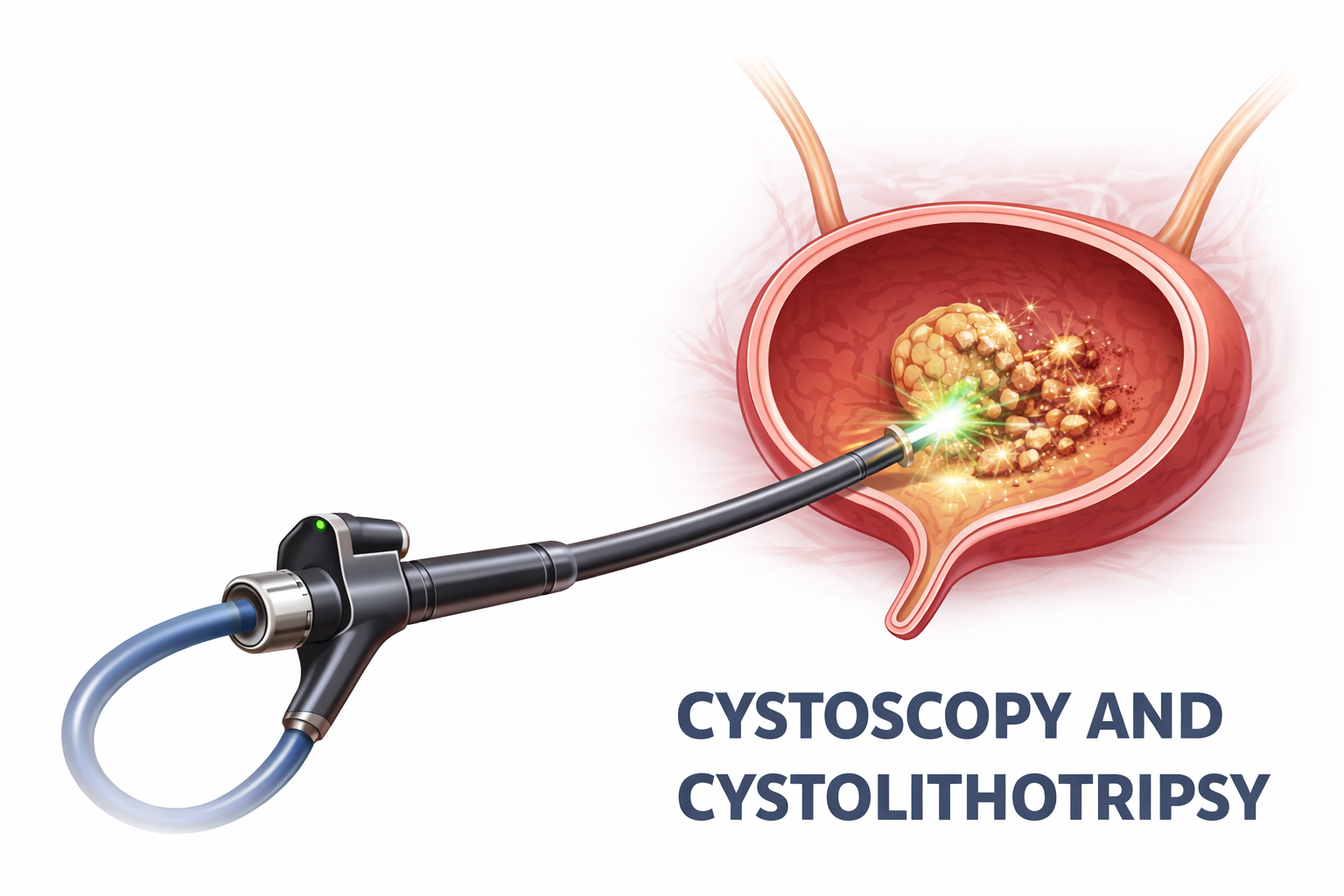
Cystoscopy and cystolithotripsy are advanced endoscopic procedures used in urology to diagnose and treat conditions affecting the urinary bladder. A cystoscopy involves the insertion of a thin, flexible tube called a cystoscope through the urethra to directly visualize the bladder and urethral lining. This procedure allows the urologist to detect abnormalities such as bladder stones, tumors, strictures, infections, or inflammation. Cystolithotripsy is a specialized procedure performed during cystoscopy to break down bladder stones into smaller fragments using laser or other energy sources so they can be safely removed or passed naturally. These minimally invasive procedures are commonly performed by experienced urologists like Dr. Neil N. Trivedi, offering patients precise diagnosis and effective treatment with minimal discomfort and faster recovery.
Bladder stones that require cystolithotripsy usually develop when urine remains in the bladder for a long time and minerals in the urine crystallize to form stones. Several conditions can contribute to this process, including bladder outlet obstruction due to prostate enlargement, urinary tract infections, neurogenic bladder, or incomplete bladder emptying. In some patients, long-term catheter use, bladder diverticula, or foreign bodies in the urinary tract can also lead to stone formation. Identifying the underlying cause is essential to prevent recurrence and ensure long-term urinary health.
Patients with bladder stones or other bladder abnormalities may experience a range of symptoms. Common signs include frequent urination, pain or burning during urination, lower abdominal discomfort, difficulty passing urine, and interruption of the urinary stream. Some individuals may notice blood in the urine (hematuria), cloudy or foul-smelling urine, or recurrent urinary tract infections. In certain cases, bladder stones may cause sudden blockage of urine flow, leading to severe discomfort and difficulty urinating. However, small stones or early bladder conditions may sometimes remain asymptomatic and are discovered during routine evaluation.
Diagnosis typically begins with a detailed medical history and physical examination. Urine tests are commonly performed to check for infection, blood, or crystal deposits. Imaging studies such as ultrasound, X-rays, or CT scans may be recommended to detect bladder stones and assess the urinary tract. Cystoscopy remains one of the most accurate diagnostic tools, as it allows the urologist to directly visualize the interior of the bladder and urethra. This direct examination helps identify stones, tumors, strictures, or inflammation and also guides the most appropriate treatment approach.
The treatment approach depends on the size, number, and cause of the bladder stones or the underlying bladder condition. Small stones may occasionally pass on their own with increased fluid intake and medications. However, larger stones usually require removal through cystolithotripsy. During this minimally invasive procedure, a cystoscope is inserted into the bladder and specialized instruments or laser energy are used to break the stones into smaller fragments. These fragments are then removed or flushed out of the bladder. In some cases where bladder outlet obstruction or prostate enlargement contributes to stone formation, additional procedures may be recommended to address the root cause and prevent recurrence.
After cystoscopy or cystolithotripsy, patients are usually able to return home the same day. Mild discomfort during urination, slight blood in the urine, or increased urinary frequency may occur temporarily as the bladder heals. Patients are generally advised to drink plenty of fluids to help flush out remaining stone fragments and reduce irritation. Antibiotics may be prescribed to prevent infection, and pain-relieving medications can be used if needed. Follow-up visits are important to ensure proper healing and to evaluate the bladder for any remaining fragments or underlying issues.
Cystoscopy and cystolithotripsy are considered safe and effective procedures when performed by an experienced urologist. However, as with any medical procedure, certain risks may exist. Possible complications include urinary tract infection, temporary bleeding in the urine, bladder irritation, or difficulty urinating for a short period after the procedure. In rare cases, injury to the bladder or urethra may occur. Most complications are mild and can be managed effectively with appropriate medical care.
It is important to consult a urologist if you experience persistent urinary symptoms such as painful urination, frequent urination, difficulty passing urine, or blood in the urine. Recurrent urinary tract infections, lower abdominal pain, or sudden interruption of urine flow should also prompt medical evaluation. Early diagnosis and timely treatment can prevent complications and improve urinary health. If you notice worsening symptoms after a procedure, including fever, severe pain, or inability to urinate, seeking immediate medical attention is recommended. Timely consultation with an experienced specialist like Dr. Neil N. Trivedi ensures accurate diagnosis and access to advanced, minimally invasive treatment options.

Chat With Me