TURP vs HOLEP vs Laser Prostate Surgery: Which Is Right for an Enlarged Prostate?
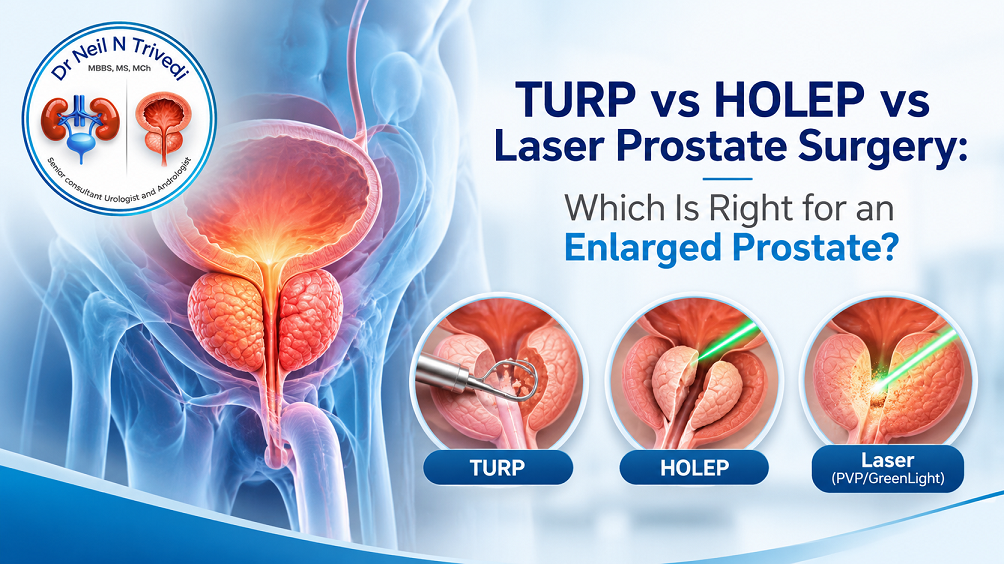
No single surgery fits every man. The right procedure depends on your prostate size, your bleeding risk, your overall health, and the results you want. TURP suits small-to-moderate prostates, HOLEP handles a prostate of any size with the most durable outcomes, and laser vaporisation offers a gentle, low-bleeding option for higher-risk patients. A skilled urologist matches the method to your body – never the other way round. If an enlarged prostate is disrupting your sleep, your bladder, and your daily confidence, surgery can restore normal urine flow and give you lasting relief. But the moment you start researching, three names appear again and again: TURP, HOLEP, and laser prostate surgery. This guide explains how each one works, what sets them apart, and how to choose wisely so you can walk into your consultation already informed. Understanding an Enlarged Prostate (BPH) Benign prostatic hyperplasia (BPH) is a non-cancerous enlargement of the prostate gland that squeezes the urethra and blocks urine flow. It becomes more common with age; the prevalence of BPH rises to around 60% by age 60 and 80% by age 80. Typical symptoms include a weak stream, frequent urination, waking up at night to pass urine, urgency, and a feeling that the bladder never fully empties. Doctors usually begin with medication. Surgery becomes the right option when symptoms are moderate to severe and no longer respond to medicines. Importantly, these procedures relieve urinary obstruction – they do not treat or prevent prostate cancer. TURP: The Long-Standing Gold Standard Transurethral Resection of the Prostate (TURP) has been the benchmark surgery for an enlarged prostate for decades. The surgeon passes a resectoscope through the urethra – with no external cuts – and trims away the excess prostate tissue that blocks urine flow. The procedure usually takes about 60 to 90 minutes under general or spinal anaesthesia. After surgery, a catheter stays in place for roughly 24 to 48 hours while swelling settles. Most men return to desk work within about two weeks and to full activity within four to six weeks. TURP relieves symptoms effectively, but it carries a few considerations: retrograde ejaculation (semen passing backward into the bladder) is a common long-term effect, while erectile dysfunction and loss of bladder control are rare. Because residual tissue can regrow, TURP carries a higher long-term retreatment rate than newer techniques. For a straightforward case, an experienced TURP specialist in Secunderabad can deliver excellent, proven results. HOLEP: The Size-Independent Modern Standard Holmium Laser Enucleation of the Prostate (HOLEP) is the technique that is steadily replacing TURP. Instead of shaving tissue in pieces, the surgeon uses a holmium laser to enucleate – to peel the entire obstructing lobe away from its outer capsule – then removes it, making HOLEP the endoscopic equivalent of open prostate surgery, with no incisions. Its biggest strength is versatility. HOLEP is size-independent: it treats prostates of virtually any size, including very large glands over 200 grams. Current international urology guidelines now recognise it as the one surgical option recommended for a prostate of any size. Compared with TURP, HOLEP causes less bleeding, needs fewer blood transfusions, and allows a shorter catheter time and hospital stay. It is also the most durable choice – long-term studies report retreatment rates as low as 0 to 4%. As a bonus, the removed tissue is sent for analysis, which TURP’s alternative laser methods cannot offer. The trade-off: HOLEP has a steep learning curve, often requiring 25 to 100 cases before a surgeon reaches full proficiency – so outcomes depend heavily on choosing a genuinely experienced hand. Laser Prostate Surgery (GreenLight / PVP): The Low-Bleeding Option “Laser prostate surgery” most often refers to photoselective vaporisation of the prostate (PVP), performed with a high-energy laser. Here the surgeon vaporises the obstructing tissue rather than removing it in pieces, creating a clear channel that restores urine flow. Its standout advantage is safety for fragile patients. Because it causes very little bleeding, it suits men on blood-thinning medication or with significant heart conditions. It is frequently an outpatient procedure, with the catheter often removed within 24 hours. The main limitation is that vaporisation destroys the tissue, so no sample remains for laboratory testing, and not every patient is a suitable candidate; very large prostates are often better served by HOLEP. TURP vs HOLEP vs Laser: A Side-by-Side Look Factor TURP HOLEP Laser (PVP/GreenLight) Prostate size suited Small–moderate Any size, incl. very large Small–moderate Bleeding Moderate Lowest Very low Catheter/hospital time Longer Shorter Shortest (often outpatient) Tissue sent for analysis Yes Yes No Long-term durability Good Highest (lowest retreatment) Good Best suited for Standard cases Large glands, lasting results High-risk / blood-thinner patients Which Procedure Is Right for You? Choose with your specialist, not from a search bar. If your prostate is large, or you want the most durable result with the lowest chance of needing a repeat, HOLEP usually leads. If you take blood thinners or carry cardiac risk, laser vaporisation offers a gentler path. If your prostate is small-to-moderate and your health is otherwise sound, TURP remains a reliable, time-tested choice. The surgeon’s experience often matters as much as the technology itself. Choosing the Best Prostate Treatment in Secunderabad The right diagnosis, accurate prostate sizing, and an honest discussion of each option decide your outcome far more than the brand of laser. Dr. Neil N. Trivedi – a urologist, andrologist, and endourology specialist in Secunderabad – evaluates your symptoms, prostate size, and overall health, then recommends the technique that fits you. For men seeking the best prostate treatment in Secunderabad, that personalised, evidence-based approach is what turns a good procedure into a lasting result. Booking an early consultation with an experienced TURP specialist in Secunderabad helps you act before symptoms worsen. Frequently Asked Questions Q1. Which prostate surgery is the most permanent?A: HOLEP offers the most durable, long-lasting relief, with the lowest reported retreatment rates because it removes the entire obstructing tissue rather than only part of it. Q2. Is laser prostate surgery safer than